
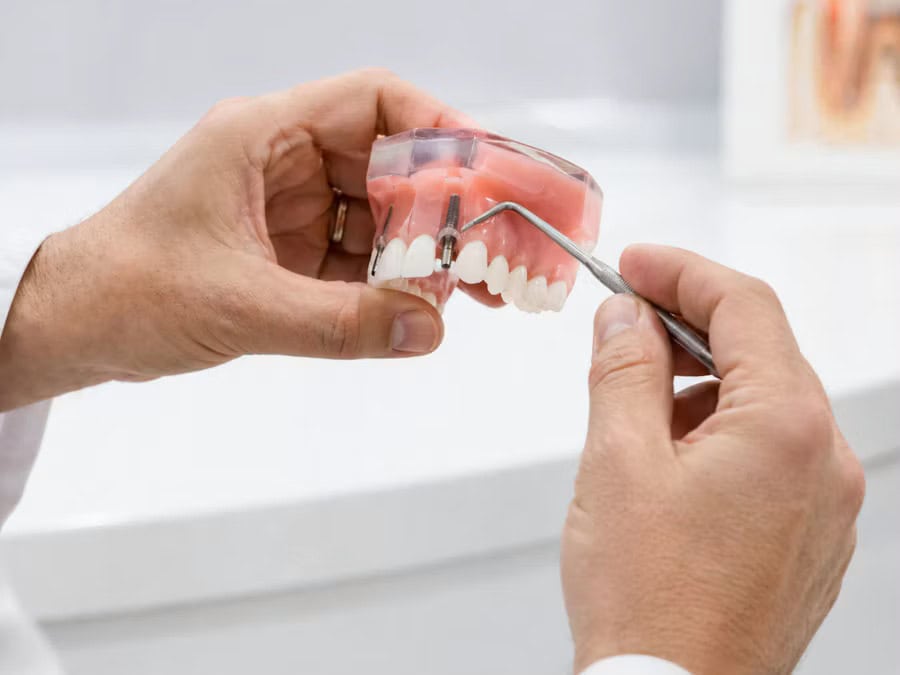
Replacing a Front Tooth With an Implant in Fort Myers: How Gumline and Crown Shape Affect Your Smile
Replacing a front tooth with a dental implant involves more than placing an artificial tooth root and attaching a crown. Front teeth are highly visible when you smile and speak, so the result depends on how well the new tooth fits the teeth and gums around it.
The appearance of a front tooth implant is shaped by the implant’s position, the amount of supporting bone, the gumline around the new tooth, and the emergence profile, which is how the crown rises out of the gum tissue. The implant crown must also coordinate with nearby teeth in shape, size, color, and translucency. An individualized implant evaluation in Fort Myers can show what a natural-looking replacement tooth will require in your case.
Three connected structures work together in a front-tooth implant: the implant fixture below the gums, which acts as the artificial tooth root; the gum and bone tissue surrounding the restoration; and the visible implant crown. Because these structures affect one another, planning for dental implants in Fort Myers works backward from the final tooth. This approach, called restoration-driven planning, decides where the new tooth should sit before deciding where the implant goes.
Why Is Replacing a Front Tooth Different From Replacing a Back Tooth?
Every implant needs suitable bone and careful planning. A front tooth adds a layer of visual detail that patients and the people around them notice.
What Is the Esthetic Zone in Dental Implant Treatment?
The esthetic zone is the part of the dental arch that shows when you smile. It usually includes the upper front teeth and, for many people, some of the gum tissue above them. In this area:
- Small differences in tooth shape or color are easier to notice.
- Gum contours may be visible, especially with a high smile line.
- Tooth proportions affect how balanced the smile looks.
The size of the esthetic zone varies from person to person, depending on lip position and how much of the teeth and gums show during a natural smile.
Why Does an Upper Front-Tooth Implant Require Careful Planning?
The upper front teeth frame the smile. The length and width of a new crown affect symmetry, and even a small difference in gum height beside a central incisor can stand out. The bone on the lip side of upper front teeth is also often thin, which affects how well the gum tissue is supported. Where the implant sits influences how the final crown can be shaped.
Is a Front-Tooth Implant Different From a Molar Implant?
The priorities differ, even though both need sound clinical planning.
| Front-tooth implant | Back-tooth implant |
| Esthetics and smile appearance | Chewing forces |
| Gumline position | Occlusal anatomy (the biting surface) |
| Crown contour | Functional loading |
| Shade and translucency | Cleaning access |
| Speech | Bite stability |
| Bite guidance when the jaw moves | Space for the restoration |
Neither location is automatically easier. Each has its own planning demands.
Why Does Gumline Symmetry Matter for a Front-Tooth Dental Implant?
The gum tissue frames each front tooth. When the frame around an implant crown matches the teeth beside it, the new tooth is more likely to blend in.
What Is the Gingival Margin Around an Implant Crown?
The gingival margin is the visible edge of gum tissue around a tooth or crown. Its height helps determine how long a tooth appears, and its curved shape affects whether neighboring teeth look even. The dentist evaluates the gingival margin around a front implant relative to the adjacent and opposite teeth, so the implant crown fits the surrounding tissue rather than standing apart from it.
How Can an Uneven Gumline Make an Implant Crown Look Too Long?
If the gum sits higher on the implant crown than on the neighboring teeth, more of the crown shows, and the tooth looks longer. This can happen when gum tissue recedes or when the tissue didn’t fully develop to match the adjacent teeth. Crown shape also affects perceived length.
Because of this, the dentist evaluates the tissue before finalizing the crown’s contours. Replacing or reshaping a crown doesn’t correct every gumline difference, especially when the underlying tissue has changed.
What Is the Interdental Papilla Between a Front Implant and a Natural Tooth?
The interdental papilla is the small triangle of gum tissue that fills the space between two teeth, or between an implant crown and a neighboring tooth, below the point where they touch. Its height affects smile appearance. The papilla’s position depends on the bone and soft tissue underneath it, and when this tissue is reduced, a dark space can appear between the teeth.
What Causes Black Triangles Beside an Implant Crown?
A black triangle is a visible gap near the gumline between two teeth. Beside an implant crown, it can result from several factors:
- Missing or reduced papilla tissue
- Changes in gum support
- The shape of the neighboring tooth
- Where the crowns make contact
- The contour of the underlying bone
- A history of periodontal disease
Because there are several possible causes, black triangles need a clinical evaluation before any solution can be discussed.
Why Does Gum Thickness Matter Around a Front Implant?
Dentists describe gum thickness as the gingival phenotype. Thin gum tissue can make contour changes, or the color of underlying components, more noticeable. Thicker tissue may create different restorative conditions. Tissue thickness is part of the risk assessment for a front implant.
In selected cases, soft-tissue augmentation may be considered by an appropriate clinician to add thickness. Whether it’s needed depends on the exam.
How Does Jawbone Shape Affect the Appearance of a Front-Tooth Implant?
Gum tissue rests on bone. When the bone changes, the gumline often follows.
Why Is the Facial Bone Important for Gumline Support?
The facial bone is the layer of bone on the lip side of the front teeth. Its shape and thickness help determine the anatomy around an implant. When facial bone is thin or missing, the gum contour above it may change, and implant placement has to respect the anatomy that’s actually available.
Can Bone Loss Make a Front-Tooth Implant Look Different From Nearby Teeth?
Yes. After a tooth is lost, the ridge of bone that held it can shrink or flatten. Reduced bone may leave less support for the gum tissue, so the area above the implant crown can look flatter or recessed compared with the neighboring teeth. The final crown has to be planned around the tissue conditions that are present, not ideal ones.
When Might Bone Grafting Be Considered for a Front-Tooth Implant?
Bone grafting may be considered when the site lacks enough bone for the planned implant position, or when the ridge contour needs to be preserved or rebuilt. The decision depends on the exam and imaging, and surgery may be staged. This article on bone grafting before dental implants covers how that decision is made.
Can Gum or Bone Contours Always Be Restored Completely?
No. What can be achieved depends on the patient’s anatomy, how much tissue was lost, healing potential, and the complexity of treatment. An honest conversation about realistic expectations is part of front-tooth implant planning.
How Does Implant Position Affect the Final Front-Tooth Crown?
The implant’s position underneath the gum shapes almost every visible decision made later.
Why Is Implant Position Planned Before the Crown Is Made?
With restoration-driven planning, the dentist typically:
- Determines where the replacement tooth should be
- Evaluates the neighboring teeth
- Assesses the gumline and bone
- Plans the implant fixture’s position
- Considers the abutment and crown design
- Reviews the expected bite and appearance
The goal is an implant that supports the final restoration, not one that simply occupies wherever bone happens to be.
What Happens if an Implant Is Positioned Too Far Toward the Lips?
An implant placed too far toward the lips can limit how the crown is shaped. It may also increase the risk of gum recession or other esthetic complications, and the final crown may be harder to blend with the neighboring teeth. This is one reason front implants are planned in three dimensions.
Why Does the Depth and Angle of the Implant Matter?
Implant depth affects how much space is available for the components that connect the implant to the crown. The angle influences the direction of the crown and, for some designs, where a screw access opening would sit. Both affect the crown’s final contour, and three-dimensional planning helps evaluate them before surgery.
How Does CBCT Imaging Help Plan a Front-Tooth Implant?
CBCT is a 3D cone beam scan. Mitchell Dentistry uses Sirona Orthophos CBCT to evaluate:
- Available bone
- Facial bone contour
- The position of neighboring roots
- Proposed implant position and angle
- Space for the restoration
This overview of CBCT implant planning explains how the scan guides each step in more detail.
What Is the Emergence Profile of a Front-Tooth Implant Crown?
The emergence profile is one of the most important, and least discussed, parts of a natural-looking front implant.
What Does “Emergence Profile” Mean?
The emergence profile is the shape of the implant restoration as it passes through and rises out of the surrounding gum tissue. A natural tooth emerges from the gums with its own contour. An implant restoration has to recreate that transition, starting from a round implant below the gums.
The emergence profile connects four things: the implant position, the abutment shape, the tissue contour, and the visible crown.
How Does the Emergence Profile Affect Gum Contour?
The restoration’s shape helps support the gum tissue around it. Too much contour can press on the gums, while too little support may lead to a different visible contour. The right design depends on the patient’s tissue anatomy and the implant’s position.
What Is the Difference Between Critical and Subcritical Crown Contours?
Dentists sometimes divide the emergence profile into two zones:
- Critical contour: the area just under the visible gum margin, which strongly influences the final outline of the gumline
- Subcritical contour: the deeper area below that, which influences how much space and support the surrounding tissue has
Both zones are planned for each case based on tissue anatomy. They aren’t set to a standard measurement.
Can a Temporary Crown Help Shape the Gum Around an Implant?
Sometimes. A provisional restoration can help guide soft-tissue contours and let the dentist evaluate appearance before the final crown is made. Whether this is possible depends on implant stability and the treatment protocol. Not every front-tooth implant receives a temporary crown attached to the implant, and Mitchell Dentistry doesn’t place immediate-load implants.
How Do Dentists Match a Front Implant Crown to the Neighboring Teeth?
Shape, size, and color all have to work together for a front crown to blend in.
How Is the Correct Crown Length and Width Determined?
The dentist considers several factors when designing crown length and width:
- The neighboring teeth and the opposite front tooth
- Your existing tooth proportions
- Gumline position
- Your bite and available space
- Your facial and smile characteristics
Why Does the Shape of the Opposite Front Tooth Matter?
When a central incisor is replaced, the opposite central incisor often serves as the reference. Its shape, edge position, curvature, and proportions can be compared with the planned crown. Exact symmetry isn’t always possible or necessary. The goal is visual harmony with your natural teeth.
How Is the Color of a Front Implant Crown Matched?
Tooth color has several dimensions:
- Hue: the basic color family
- Value: brightness, or how light or dark the tooth appears
- Chroma: color intensity
- Translucency: how light passes through the tooth
- Surface texture: how the surface reflects light
The dentist also considers the characteristics of neighboring teeth and how lighting changes appearance. A single shade code doesn’t capture every aspect of how a tooth looks. Shade matching for a front crown draws on the same attention to detail as cosmetic dentistry in Fort Myers, where tooth color, shape, and gumline are planned together.
Why Does Tooth Translucency Matter?
Natural teeth don’t reflect light uniformly. The biting edge is often more translucent than the area near the gumline, and color varies across the tooth. Crown material, its thickness, and what sits underneath all affect how light moves through the crown. These details help a front crown look natural in different lighting.
Can a Front Implant Crown Look Dark Near the Gumline?
It can. Possible contributing factors include:
- Thin gum tissue
- Dark underlying components showing through
- Gum recession
- Crown or abutment material
- Contour that creates a shadow
- Tissue inflammation
Each cause calls for a different solution, so a dark area needs to be evaluated before anything is changed.
Do Zirconia and Ceramic Crown Materials Look Different?
Yes. Crown materials differ in strength, color, translucency, and how well they hide underlying components. No single material suits every patient. The dentist recommends a material based on the tooth’s position, tissue conditions, and esthetic needs, the same considerations behind crown design in restorative dentistry.
How Does the Abutment Influence Front-Tooth Implant Esthetics?
The abutment sits between the implant and the crown, right where the gum tissue meets the restoration.
What Does the Implant Abutment Do?
The abutment connects the implant fixture in the jawbone to the crown above it. It’s often secured with a small screw and extends through the gum tissue, which is why its shape and color matter so much for a front tooth. For a fuller explanation of how these components fit together, see this guide to the parts of a dental implant.
Why Might a Custom Abutment Be Used for a Front Tooth?
A custom abutment can be shaped for an individual case. That can help with:
- A restorative contour tailored to the patient
- An implant that sits at a particular angle
- How the crown emerges from the gums
- Thin or thick tissue
- Specific esthetic requirements
Can Abutment Material Affect the Appearance of the Gums?
Yes. When gum tissue is thin, the abutment’s color can influence how the tissue looks. Tissue thickness and esthetic goals help the dentist decide which material fits the case. Not every patient needs a tooth-colored abutment.
Does Screw-Retained vs Cement-Retained Design Affect the Restoration?
Implant crowns can be held in place with a screw or with cement, and both are used in implant dentistry. The implant’s angle can affect which design works. Other considerations include where a screw access opening would sit, how easily the crown can be removed for service, and managing cement below the gums. The dentist selects the design that suits each case.
What Happens During a Front-Tooth Implant Consultation in Fort Myers?
A front-tooth consultation looks at both function and appearance before any treatment is recommended.
What Does the Dentist Examine Before Replacing a Front Tooth?
The evaluation typically covers:
- The condition of the existing tooth, if it’s still present
- Gumline position
- Tissue thickness
- Bone contour
- Adjacent and opposing teeth
- Your smile line
- Your bite
- Medical history
- Your esthetic expectations
Why Are Digital Scans and Photographs Useful?
Digital scans and photographs record tooth shape and proportions, show your smile line, and give the dentist a reference for planning the restoration. They also make it easier to explain the plan to you and coordinate digital restorative work, which Mitchell Dentistry supports with an in-house lab.
How Can Digital Smile Design Support Front-Tooth Restoration Planning?
Mitchell Dentistry uses digital smile design with Exocad to plan tooth shape, proportions, and contours on screen. For a front tooth, this kind of visualization can help communicate the intended crown shape and how it relates to the rest of the smile. Not every implant consultation includes a digital smile design simulation. It’s used when it helps the case.
What Questions Should You Ask About the Final Crown?
- How will the crown match my neighboring teeth?
- What gumline differences should I expect?
- Does my bone support affect the visible result?
- Will the implant position be planned around the final crown?
- What crown material may be used?
- Will a custom abutment be considered?
- Will I need bone grafting?
- What temporary tooth options are available?
- How will my bite be checked?
- What maintenance will the implant need?
What Happens if a Front Tooth Must Be Extracted Before Implant Treatment?
Many front-tooth implant cases begin with a tooth that can’t be saved.
Why Does Extraction Planning Matter for Gum and Bone Preservation?
Removing a tooth changes the socket, and the surrounding bone and gum contour can change as the area heals. The future implant site may need preservation at the time of extraction. The timing of each step depends on the condition of the site and the overall treatment plan.
Can You Have a Temporary Front Tooth While the Site Heals?
Usually, yes. Temporary options may include a removable temporary tooth, a bonded temporary replacement attached to neighboring teeth, or another provisional solution chosen by the dentist. The right choice depends on the case.
Does the Final Crown Go On Immediately After Implant Placement?
No. At Mitchell Dentistry, implant treatment is staged. The implant is given time to heal and integrate with the jawbone before the final crown is placed. This overview of how implants heal in the jawbone explains that process.
Why Can Front-Tooth Implant Treatment Require Multiple Stages?
A front-tooth implant may involve several stages:
- Extraction, if needed
- Site preservation
- Bone evaluation
- Implant planning
- Implant placement
- Healing
- Gum-contour assessment
- Final crown fabrication
Not every case includes every stage, and the timeline varies from patient to patient.
Front-Tooth Implant vs Dental Bridge: Which May Be More Appropriate?
Both can replace a missing front tooth. They work differently.
How Does a Single-Tooth Implant Replace a Front Tooth?
A single-tooth implant uses an implant fixture in the jawbone, an abutment, and a crown. It supports itself, so it doesn’t rely on the neighboring teeth.
How Does a Traditional Bridge Replace a Front Tooth?
A traditional dental bridge uses a replacement tooth, called a pontic, supported by crowns on the neighboring teeth. Those teeth are reshaped to hold the crowns.
When Might a Dental Bridge Be Considered Instead?
A bridge may be the better fit depending on:
- The condition of the adjacent teeth, especially if they already need crowns
- Bone and gum anatomy at the site
- Whether surgery is suitable for the patient
- Medical considerations
- Esthetic requirements
- The patient’s treatment preferences
The right option depends on the exam. Neither is automatically better.
What Can Affect the Final Appearance of a Front-Tooth Implant?
A front implant’s appearance can change over time, and some concerns have more than one cause.
Can Gum Recession Change the Look of the Implant Crown Over Time?
Yes. Soft tissue can change over the years, and recession can expose more of the restoration. Regular implant maintenance visits help monitor the tissue so changes are noticed early.
Can a Front Implant Crown Be Adjusted if It Looks Too Long or Wide?
Some concerns can be evaluated for crown adjustment or replacement. Not every esthetic problem can be solved by reshaping the crown, especially when the gum or bone has changed.
What if the Crown Color Does Not Match Nearby Teeth?
The dentist evaluates the shade, lighting, crown material, surface texture, underlying components, and the color of the neighboring teeth. Don’t try whitening an implant crown at home. Crown materials don’t respond to whitening the way natural enamel does, and whitening the natural teeth around a crown can make a mismatch more noticeable.
Why Is Long-Term Gum Health Important for Front Implants?
Healthy gum tissue supports a stable, visible gumline. Inflammation around an implant can lead to tissue changes and, in some cases, bone loss, which is why maintaining healthy gums around implants matters for front implants in particular.
Schedule a Front-Tooth Dental Implant Consultation in Fort Myers, FL
If you’re missing a front tooth or have been told that a visible tooth needs to be replaced, Mitchell Dentistry in Fort Myers can evaluate the implant site, surrounding gumline, neighboring teeth, and restoration options before recommending a treatment plan.
That evaluation can include crown shape and color, digital planning, and your bite and esthetic goals, discussed in an unhurried visit. Patients from Fort Myers, Sanibel Island, and across Lee County are welcome. To talk through your options, you can schedule a consultation.
Frequently Asked Questions About Front-Tooth Dental Implants
Can a front tooth be replaced with a dental implant?
Yes. A single-tooth implant may be an option when bone, gum health, bite, and other clinical factors support treatment.
Can a front implant crown look like a natural tooth?
A crown can be designed to match neighboring teeth, but the final appearance depends on tissue support, tooth shape, shade, and individual anatomy.
Why does the gumline matter for a front-tooth implant?
The visible gumline influences crown proportions and smile symmetry.
What is an implant emergence profile?
It’s the contour of the restoration where it passes through and emerges from the surrounding gum tissue.
Can a front implant crown look longer than the other teeth?
Yes. Differences in gum position, crown design, or underlying tissue contours can affect how long the tooth appears.
Can an implant crown match the color of my other teeth?
The dentist can select and design materials to coordinate with nearby teeth, although an exact match under all lighting conditions can’t be guaranteed.
Does a front-tooth implant require bone grafting?
Not always. It depends on the site’s bone volume, contour, and planned implant position.
Will I have a temporary front tooth while the implant heals?
Temporary options may be available, but the design and timing depend on the clinical plan.
Can the gumline change after a front-tooth implant?
Yes. Tissue contours can change during healing and over time.
How is a front implant different from a back-tooth implant?
Front-tooth planning places particular emphasis on gum contour and crown esthetics, while back-tooth planning often emphasizes chewing load and function.
Can a front implant crown be replaced without removing the implant?
In some situations, the crown or abutment can be serviced separately, depending on the condition and design of the implant system.