
What Is an Implant-Supported Bridge and When Is It Recommended?
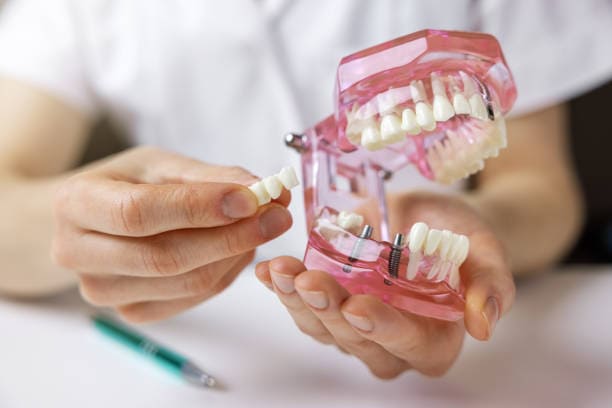
An implant-supported bridge is a fixed tooth replacement that uses dental implants, rather than natural teeth, to support a bridge replacing several missing teeth. It may be recommended when multiple teeth are missing in a row, and the patient wants a stable option that doesn’t rely on reshaping neighboring teeth for support. The dentist must evaluate bone volume, gum health, bite forces, spacing, and the final bridge design. During an implant consultation in Fort Myers, Mitchell Dentistry can compare an implant-supported bridge with a traditional bridge, partial denture, or full-arch option.
Missing several teeth in a row creates both chewing and spacing problems, and how the replacement teeth are supported matters just as much as how they look. A traditional bridge uses natural teeth for support. An implant-supported bridge uses implant fixtures as anchors instead. The right choice depends on bone, gums, bite, the condition of adjacent teeth, and what the patient actually wants out of treatment.
What Is an Implant-Supported Bridge?
An implant-supported bridge is a fixed dental restoration that replaces multiple missing teeth and is supported by dental implants instead of natural teeth.
How Is an Implant Bridge Different From a Regular Dental Bridge?
A traditional bridge is supported by natural teeth, usually with crowns placed on the teeth next to the gap. An implant-supported bridge is supported by dental implants placed in the jawbone instead. A traditional bridge may require reshaping those adjacent teeth to hold the crowns. An implant bridge may avoid preparing healthy neighboring teeth in selected cases. Both are fixed restorations that stay in place day to day, but the support structure underneath them is fundamentally different.
| Bridge Type | Support | Common Use |
|---|---|---|
| Traditional Bridge | Natural teeth | One or more missing teeth when adjacent teeth can support crowns |
| Implant-Supported Bridge | Dental implants | Several missing teeth when implants can support a fixed bridge |
Is an Implant-Supported Bridge Fixed or Removable?
An implant-supported bridge is generally fixed, meaning the patient doesn’t remove it daily. It’s attached to the implants through abutments or other prosthetic components, and the dental team removes or services it when needed rather than the patient handling that at home. This is a key difference from a removable partial denture, which the patient takes out for cleaning.
What Parts Make Up an Implant Bridge?
An implant bridge is built from several components working together:
- Implant fixtures placed in the jawbone
- Abutments connecting the implants to the bridge
- The bridge framework itself
- The replacement teeth attached to that framework
- Prosthetic screws or cemented components, depending on the design
- Gum and bone support underneath all of it
According to the U.S. Food and Drug Administration, dental implant systems generally include an implant body and abutment, and may also include an abutment fixation screw connecting the two, all of which help support the final prosthesis.
When Is an Implant-Supported Bridge Recommended?
When Several Teeth Are Missing in a Row
An implant bridge may replace multiple adjacent missing teeth by spanning the gap with implants supporting the framework underneath. The number of implants needed depends on the individual case. The goal is stable, fixed tooth replacement and functional chewing, not simply filling in the visible gap.
When You Want to Avoid Preparing Healthy Adjacent Teeth
A traditional bridge often uses crowns on the neighboring teeth to hold it in place, which means those teeth get reshaped even if they were otherwise healthy. If the neighboring teeth are healthy, an implant bridge may avoid that reshaping, though this depends on available bone, spacing, bite, and overall implant candidacy. According to the American Academy of Periodontology, replacing a missing tooth with a dental implant avoids grinding down neighboring teeth the way a tooth-supported bridge requires. Implants integrate directly with the jawbone instead. This is a supporting principle rather than a guarantee that an implant bridge always preserves adjacent teeth better in every case.
When a Removable Partial Denture Feels Unstable
A partial denture is removable, and some patients would rather have a fixed replacement instead. An implant bridge can improve stability compared with a removable appliance in selected cases, though cleaning and maintenance still matter either way.
When an Older Dental Bridge Is Failing
Old bridges can loosen, decay at the margins, fracture, or simply stop fitting the way they used to. The teeth supporting that bridge can also become damaged over time, not just the bridge itself. When that happens, the dentist needs to evaluate whether those natural teeth can still hold up a replacement. If they can’t, implant support may be worth considering instead.
When the Bite Needs Stronger Fixed Support
Back teeth handle heavy chewing forces, and longer bridge spans need careful planning to hold up under that pressure. Implant position, bridge material, and bite force all factor into the plan, and habits like bruxism or clenching can influence how that plan comes together.
Does Every Missing Tooth Need Its Own Implant?
No. When several teeth are missing, a dentist may sometimes use fewer implants to support a bridge, rather than placing one implant for every missing tooth.
How Many Implants Are Needed for an Implant Bridge?
The number of implants needed depends on several factors together:
- Number of missing teeth
- Location in the mouth
- Available bone volume
- Implant spacing
- Bite force
- Bridge length
- Material
- Opposing teeth
- Gum health
- Patient habits, such as grinding
There’s no universal formula here, and specific ratios like “two implants for three teeth” are conceptual examples at best, not a rule to expect in every case.
Why Does Implant Position Matter More Than Implant Count Alone?
The bridge has to distribute chewing forces properly across its full span. That means implants need to be placed where they can actually support the final design, not just wherever is easiest. Position affects how easy the bridge is to clean, how it feels when biting, how it looks, and how well it holds up over the long term. CBCT implant planning and other digital planning tools may be used to work this out before surgery.
Can Too Few Implants Be a Problem?
Yes. Too few implants supporting a long bridge span can overload the whole structure and increase mechanical risk over time. The dentist has to balance biology, bite force, and prosthetic design when deciding on implant count.
How Is an Implant Bridge Planned?
What Happens During an Implant Bridge Consultation?
A consultation for an implant bridge typically includes a missing-teeth evaluation, an assessment of adjacent teeth, a look at gum health, a bite analysis, a bone evaluation, CBCT imaging if appropriate, digital impressions or scans, a discussion of fixed versus removable options, a review of medical history, and a treatment estimate that doesn’t include exact prices. This kind of implant consultation in Fort Myers is where a restorative dentist in Fort Myers puts all of these pieces together into an actual plan, rather than treating implant placement as a standalone procedure.
Why Does the Final Bridge Shape Matter Before Surgery?
Good planning works backward from the result. The dentist starts by figuring out where the replacement teeth should end up, then positions the implants to support that final bridge design. The bridge needs correct bite contact, room to clean around it, and a healthy relationship with the gumline. Poor planning up front can create spaces that are hard to keep clean or a bite that doesn’t feel right. Problems like these are much harder to fix after the fact than to plan around from the start.
How Can CBCT Imaging Help Plan an Implant Bridge?
CBCT imaging can help evaluate bone height and width, the position of adjacent tooth roots, nerve and sinus location, implant spacing, and where the bridge’s support points should go.
When Might Bone Grafting Be Needed Before an Implant Bridge?
Bone grafting may come up if the ridge doesn’t have enough bone at the planned implant positions. This is more common when the missing teeth have been gone for years, or when infection, trauma, or gum disease caused bone loss in that area. Grafting affects the overall treatment timeline and sequencing.
Implant Bridge vs. Traditional Bridge: Which Is Different?
How Does a Traditional Dental Bridge Work?
A traditional dental bridge uses crowns on the adjacent natural teeth to anchor the replacement teeth, called pontics, that fill the missing space. It’s fixed in place rather than removed daily, and it can be a reasonable option when the adjacent teeth already need crowns or other support for their own reasons.
How Does an Implant-Supported Bridge Work?
An implant-supported bridge places implants directly in the jawbone, with abutments connecting those implants to the bridge above. The bridge itself replaces the visible missing teeth, but unlike a traditional bridge, it doesn’t rely on the natural teeth next to it as anchors.
When Might a Traditional Bridge Still Make Sense?
A traditional bridge can still be the right call in several situations:
- The adjacent teeth already need crowns for their own reasons
- Bone or other health factors make implants less suitable
- The patient wants to avoid a surgical option
- Treatment timeline or medical considerations point that direction
The dentist works through these factors with the patient to determine which option actually fits, rather than assuming an implant bridge is automatically the better choice.
When Might an Implant Bridge Be Preferred?
An implant bridge tends to be a stronger fit when:
- Several teeth are missing
- The adjacent teeth are healthy and worth preserving
- The patient wants a fixed replacement
- Bone and gum health support implant placement
- The patient is comfortable with a surgical option
- Long-term restorative planning supports that direction
Implant Bridge vs. Partial Denture: Which Feels More Stable?
What Is a Removable Partial Denture?
A removable partial denture is an appliance that replaces missing teeth and comes out of the mouth for cleaning. It typically uses clasps or other retention methods to stay in place during the day, and it can be a genuinely helpful option in certain cases.
How Is an Implant Bridge Different From a Partial Denture?
An implant bridge is fixed and anchored to implants, while a partial denture is removable and rests on the remaining teeth and gums. Cleaning and maintenance routines differ between the two, since one comes out and the other doesn’t.
Who Might Prefer a Partial Denture Instead?
Not every patient wants a surgical option, and some patients don’t have adequate bone to support an implant bridge without additional treatment first. A partial denture can also work well as transitional treatment while a longer-term plan comes together, and some patients simply prefer a removable appliance.
Implant Bridge vs. Implant Denture or Full-Arch Implants
When Is an Implant Bridge Used Instead of an Implant Denture?
An implant bridge is usually meant for a section of missing teeth, while an implant denture is more often used for many teeth or a full arch. An implant bridge is typically fixed, while implant dentures may be removable or fixed depending on how they’re designed.
When Are Full-Arch Implants or All-on-4 More Appropriate?
Full-arch treatment, such as All-on-4, tends to make more sense in a few situations: when most or all teeth in an arch are missing or failing, when multiple separate bridge spans wouldn’t be the ideal design, or when a patient needs a complete arch prosthesis rather than a section-by-section approach. These cases require broader surgical and restorative planning than a single bridge typically involves. All-on-4 vs. snap-on dentures compares fixed and removable full-arch options in more detail.
Why the Number and Pattern of Missing Teeth Matters
The number and pattern of missing teeth generally point toward one of a few directions:
- One missing tooth → a single implant crown
- Several teeth missing in a row → an implant bridge may be considered
- Most or all teeth missing → full-arch implant options may be considered
- Scattered missing teeth in different areas → a more individualized plan
What Are the Benefits and Limitations of Implant-Supported Bridges?
Potential Benefits of an Implant Bridge
- Fixed tooth replacement that doesn’t rely on removable clasps
- May avoid preparing healthy adjacent teeth
- Restores chewing function in the missing-tooth area
- Can support multiple replacement teeth from fewer implants
- Helps distribute bite forces when planned well
- Can feel more stable than a removable partial denture
Potential Limitations of an Implant Bridge
- Requires implant surgery
- Requires sufficient bone and gum health to support the implants
- May require bone grafting first
- Needs healing time before the final bridge is placed
- Not every patient is a candidate
- Requires ongoing maintenance
- Bridge components can wear or need repair over time
- Cost structure differs from traditional bridges or partial dentures
What Can Make an Implant Bridge More Complex?
Several factors can add complexity to implant bridge planning, including:
- Long-term missing teeth
- Existing bone loss
- Gum disease
- Heavy bite force
- Teeth grinding
- Front-tooth esthetics
- Limited available space
- Nearby sinus or nerve anatomy
- Failing adjacent teeth
- Existing dentures or old bridges already in the mouth
How Do You Clean and Maintain an Implant-Supported Bridge?
Is an Implant Bridge Cleaned Like Natural Teeth?
An implant bridge is cleaned daily, but patients may need special tools to reach under and around it properly. This often includes regular brushing, floss threaders, interdental brushes, and water flossers when recommended, along with professional cleanings and gum monitoring at regular dental visits.
Why Is Gum Health Important Around Implant Bridges?
Plaque buildup can inflame the gum tissue around an implant bridge just as it can around natural teeth. That inflammation, sometimes called peri-implant inflammation, can affect the bone supporting the implants if it isn’t addressed. Regular maintenance helps protect the long-term health of implant-supported restorations.
Can an Implant Bridge Break or Loosen?
Components can wear, loosen, chip, or need repair over time, the same way any dental restoration can. When that happens, the dentist evaluates whether the issue is with the bridge itself, a screw, an abutment, the bite, or the implant underneath. Patients shouldn’t attempt to fix a loose or broken bridge themselves at home.
What Affects the Cost of an Implant-Supported Bridge?
What Cost Factors Are Involved?
An implant bridge estimate typically depends on several factors:
- The number of implants needed
- Imaging
- Whether bone grafting is required
- Extractions
- Abutments
- Bridge material
- The number of replacement teeth
- Whether a temporary restoration is used
- Who provides the surgical portion of treatment
- Lab or digital design work
- Follow-up and maintenance planning
Why Is an Implant Bridge Estimate Different From a Traditional Bridge Estimate?
An implant bridge estimate includes both surgical and restorative components, since implants have to be placed before the final bridge can go on top. A traditional bridge relies on the natural teeth already in place, which usually means more planning around preparing those teeth and less around surgical healing time.
What Should Patients Ask Before Comparing Estimates?
Before comparing bridge estimates, patients can ask:
- How many implants are included?
- Are abutments included?
- Is the final bridge itself included?
- Is CBCT imaging included?
- Is bone grafting included if it turns out to be needed?
- Who places the implants?
- Who designs and attaches the bridge?
- What maintenance should I expect?
- What happens if a component loosens down the road?
Schedule an Implant Bridge Consultation in Fort Myers, FL
Replacing several missing teeth doesn’t have to mean choosing between a traditional bridge and guesswork. Whether you’re comparing an implant-supported bridge, a traditional bridge, or a full-arch option, Mitchell Dentistry can walk through what your specific case actually needs. A Fort Myers restorative dentist evaluates your bone, gums, bite, and adjacent teeth before recommending fixed tooth replacement, rather than assuming one option fits every patient. If you’re ready to talk through your options for dental implants in Fort Myers, schedule an implant consultation with Mitchell Dentistry, serving Fort Myers and nearby Sanibel-area patients.
FAQs About Implant-Supported Bridges
What is an implant-supported bridge?
An implant-supported bridge is a fixed restoration that replaces several missing teeth and is supported by dental implants instead of natural teeth.
Is an implant bridge removable?
Usually no. Implant-supported bridges are generally fixed and removed only by the dental team when service or repair is needed.
How many implants are needed for a bridge?
It depends on the number and location of missing teeth, bone volume, bite force, bridge length, and the final restoration design.
Does every missing tooth need its own implant?
No. In selected cases, multiple missing teeth can be replaced with a bridge supported by fewer implants than the number of missing teeth.
Is an implant bridge better than a regular bridge?
Not always. An implant bridge may be useful when several teeth are missing or when healthy adjacent teeth shouldn’t be reshaped, but a traditional bridge may still be appropriate in some cases.
Can an implant bridge replace back teeth?
Yes, an implant bridge may replace back teeth if the patient has enough bone, healthy gums, and a treatment plan that can handle chewing forces.
How do you clean under an implant bridge?
Patients may use floss threaders, interdental brushes, water flossers, or other tools recommended by the dental team to clean around and under the bridge.
Can an implant bridge fail?
Any dental restoration can develop problems. Implant bridges need healthy gums, stable implants, good hygiene, bite management, and regular maintenance to hold up long-term.